
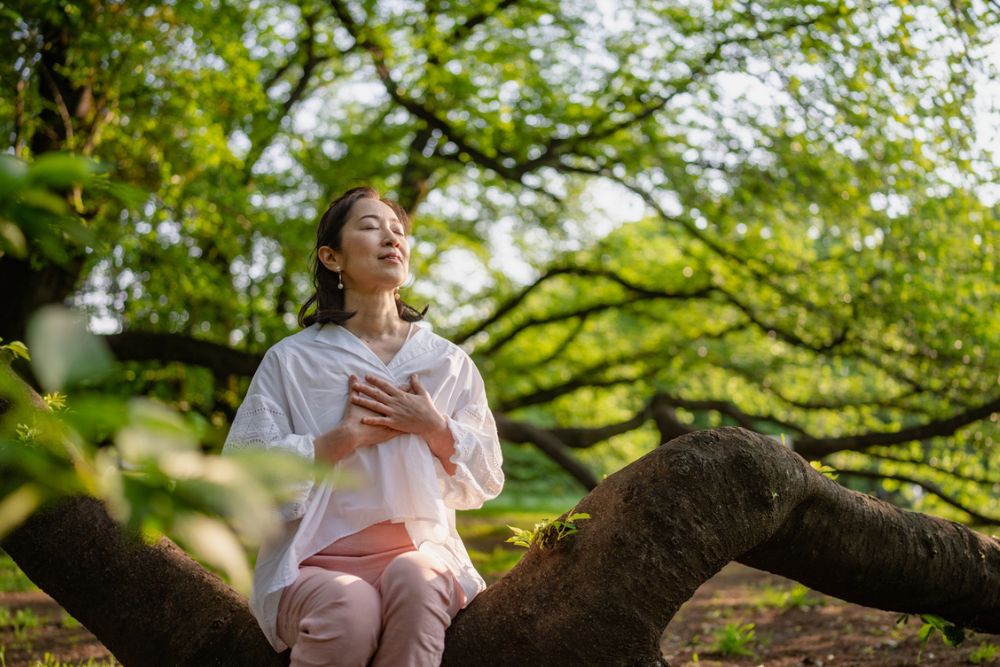
When life feels overwhelming, the answer isn’t always to do more. Sometimes, it helps to slow down and reconnect with the world around you. Forest bathing, known in Japan as shinrin-yoku, invites you to experience nature through your senses rather than treating a walk as another task to complete. By noticing sounds, scents, textures, and colors of the natural environment, you create space to pause, settle your thoughts, and discover how a change of scenery helps you feel more grounded and calm.
How Can Forest Bathing Benefit You?
Sometimes, the day feels heavy with responsibilities, worries, and decisions. Stress may become especially difficult to manage during addiction recovery, when old behaviors are changing, and new coping habits are still developing.
Spending quiet, intentional time outside offers an opportunity to step away from those demands. You might listen to birdsong, notice sunlight moving across the ground, or feel the breeze against your skin. Instead of dwelling on yesterday or worrying about tomorrow, you’re able to focus on what’s happening in the present moment.
A study published in Environmental Health and Preventive Medicine examined people practicing shinrin-yoku across 24 forests in Japan. Researchers found that forest environments were associated with lower cortisol levels, pulse rates, and blood pressure than urban environments. These findings suggest that time in nature may help support your body’s relaxation response.
For someone in recovery, this potential stress reduction is meaningful. Although forest bathing can’t prevent every craving or eliminate stress, it can become one practical tool for responding to difficult moments with greater awareness.
How Does Spending More Time in Nature Support Recovery?
While forest bathing isn’t an addiction treatment, its potential benefits complement your comprehensive recovery plan in several ways.
Encouraging Emotional Balance
A quieter environment provides space to acknowledge feelings without immediately reacting to them. Rather than trying to suppress sadness, frustration, or anxiety, you can notice those emotions and allow them to pass without judgment.
Supporting Mental and Physical Wellbeing
A recent systematic review in Frontiers in Psychology examined forest bathing’s short-term effects on psychological wellbeing and cardiovascular health. The researchers found potential improvements in measures such as anxiety, low mood, and heart rate. These findings suggest that dedicating intentional time in nature may be a helpful addition to everyday wellness routines.
Rebuilding Healthy Routines
Recovery often involves replacing substance-centered habits with activities that support wellbeing. A short visit to a wooded trail, a scenic park, or any other restorative location outdoors offers structure, gentle movement, and a positive activity to anticipate.
Strengthening Connection
Nature also provides a sense of perspective and belonging. Sharing a peaceful walk with a trusted friend, family member, or recovery-support partner may also create opportunities for connection without the pressure of a formal conversation.
How Can You Make Forest Bathing Part of Your Daily Recovery Practice?
You don’t need a remote wilderness retreat or hours of free time to begin. A neighborhood nature preserve, wooded walking path, or quiet park can provide a place to practice. Try this simple approach:
- Choose a comfortable setting. Find a safe, accessible location where you can relax without feeling rushed.
- Put distractions aside. Silence your phone and permit yourself to step away from daily demands.
- Engage your senses. Notice the colors of leaves, the sound of birds, the smell of damp earth, and the feeling of air on your skin.
- Slow down. Walk gently or sit quietly. There’s no distance to achieve and no expectation to perform.
- Notice how you feel. Afterward, take a moment to reflect on your mood, stress level, or thoughts. Over time, this may help you recognize what other calming activities support your wellbeing.
Kaiser Permanente also recommends focusing on the natural environment, moving at a comfortable pace, and allowing yourself to experience moments of wonder. Start with 5–10 minutes if that feels manageable. The practice should feel restorative, not like another obligation.
Do you always have to be in the woods for shinrin-yoku to have a positive effect? Not necessarily. Spending time in a garden, on your back deck, by a tranquil pond, or near trees from a bench are effective alternatives.
Learn More About Whole-Person Care at Willingway
Time in nature allows opportunities for reflection, relaxation, and healthy connection. You don’t need to feel completely calm or leave every worry behind for the experience to matter. Sometimes healing begins with a small choice: stepping outside, taking a breath, and allowing yourself to be present. One quiet moment may not change everything, but repeated moments of care create a life in which recovery has room to grow.
We can help. For more than 50 years, the board-certified professionals at Willingway’s Georgia and Florida addiction rehabilitation locations have guided thousands of people just like you who want a better life and are willing to do what it takes to achieve it. Our whole-person philosophy focuses not only on eliminating substance use, but also on encouraging you to nurture your mind, body, and spirit. If this is the type of professional treatment you’ve hoped to find, talk with a member of our admissions team today.