
Willingway Outcomes Stand Above the National Average
At Willingway, clients report meaningful improvements in their quality of life, renewed optimism for the future, and fewer cravings after treatment. Our outcomes reflect what matters most: helping people find hope, healing, and a path forward that lasts.
Willingway clients achieved a 56% improvement in their Global Recovery Score, surpassing the national average of 37%, reflecting steady overall treatment progression. This growth is supported by a 61% improvement in resilience factors (vs. 38% nationally) and a 71% reduction in pathology symptoms (vs. 38% nationally), indicating meaningful decreases in emotional distress and relapse-related risk factors.
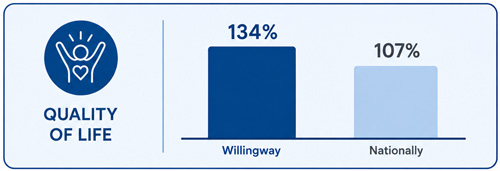
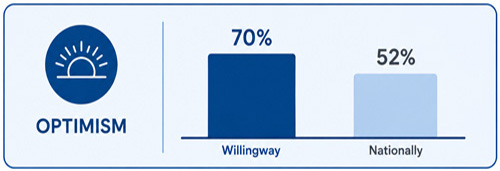
Motivation and outlook also showed measurable improvement. Clients reported a 134% increase in quality of life (vs. 107% nationally), reflecting meaningful gains in daily functioning and life satisfaction, alongside a 70% increase in optimism (vs. 52 nationally%), highlighting stronger dedication to recovery and a more hopeful future orientation.

A key strength of the Willingway program is its impact on spiritual practices. Clients experienced a 242% improvement in spiritual practices, significantly exceeding the national average of 143%.
Mental health outcomes were also strong, with a 70% reduction in depression (vs. 38% nationally) and a 62% reduction in anxiety (vs. 22% nationally), along with a 60% reduction in stress (vs. 36% nationally), demonstrating improved emotional regulation throughout treatment.
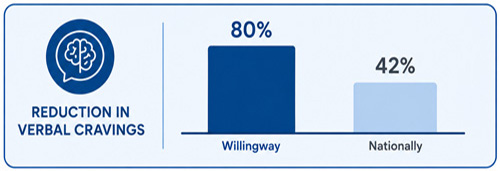
Notably, Willingway showed exceptional performance in reducing cravings. Clients reported a 80% reduction in verbal cravings (vs. 42% nationally) and an 87% reduction in visual cravings (vs. 64% nationally), indicating significant decreases in both internal urges and external trigger responses.
Overall, Willingway delivers balanced and impactful outcomes, with strengths in spiritual practices and craving reduction – critical components of long-term recovery success.